
Judge Rules MTA and NYCT Can't Unilaterally Close Station Booths
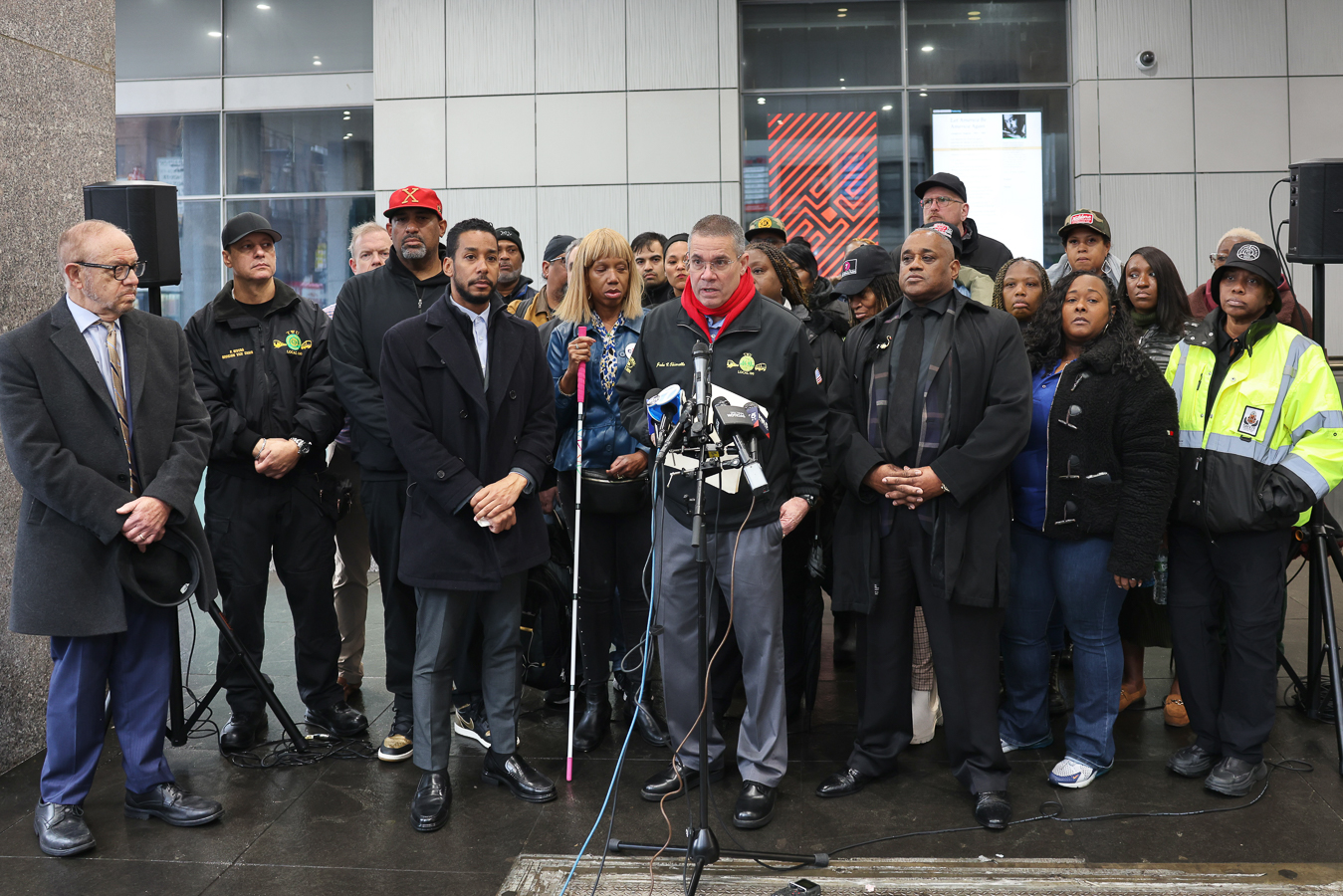
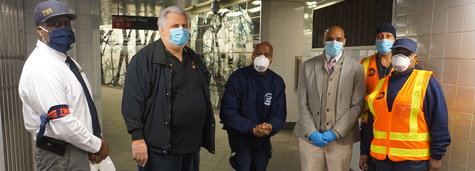
Petitioners Robert Kelley, Local 100’s Vice President of Stations, Brooklyn Borough President Antonio Reynoso and Dr. Sharon McLennon Wier, Executive Director of Center for Independence of the Disabled, New York appeared in court in April to testify during a hearing and were joined by a large group of Local 100 officers and members.
“It’s simple. We fight, we win,” said Kelley after the court decision was issued Friday. “We know the value of our agents, we know how important our agents are to the public. Whatever fight they bring, we will be ready.”
The decision of Justice Moyne acknowledged the crucial roles our Station Agents play in transit.
“The record demonstrates that Station Agents perform indispensable emergency functions, including the operation of the Emergency Booth Communications System ("EBCS").” read Friday’s court filing. “Leaving booths locked and unstaffed for eight-hour periods impairs passenger safety.”
The court papers also mentioned the “disproportionate, adverse impact on disabled subway riders,” the practice of booth closures would create, and mentioned statements made by McLennon Wier that people who are visually impaired, blind and who have other disabilities rely on our Station Agents for a variety of roles, including getting into the subway system, help with directions and navigating elevator outages and service delays.
“But for the advocacy of Local 100 and CIDNY, the MTA would have continued to engage in this practice, which endangers our disabled community members,” said Chiarello. “This is a win, because if we didn’t do anything it would have been unilaterally enacted. There is no substitute for our Station Agents--this is not an issue AI can fix."